
SPONGE SCIENCE
What is a sponge?
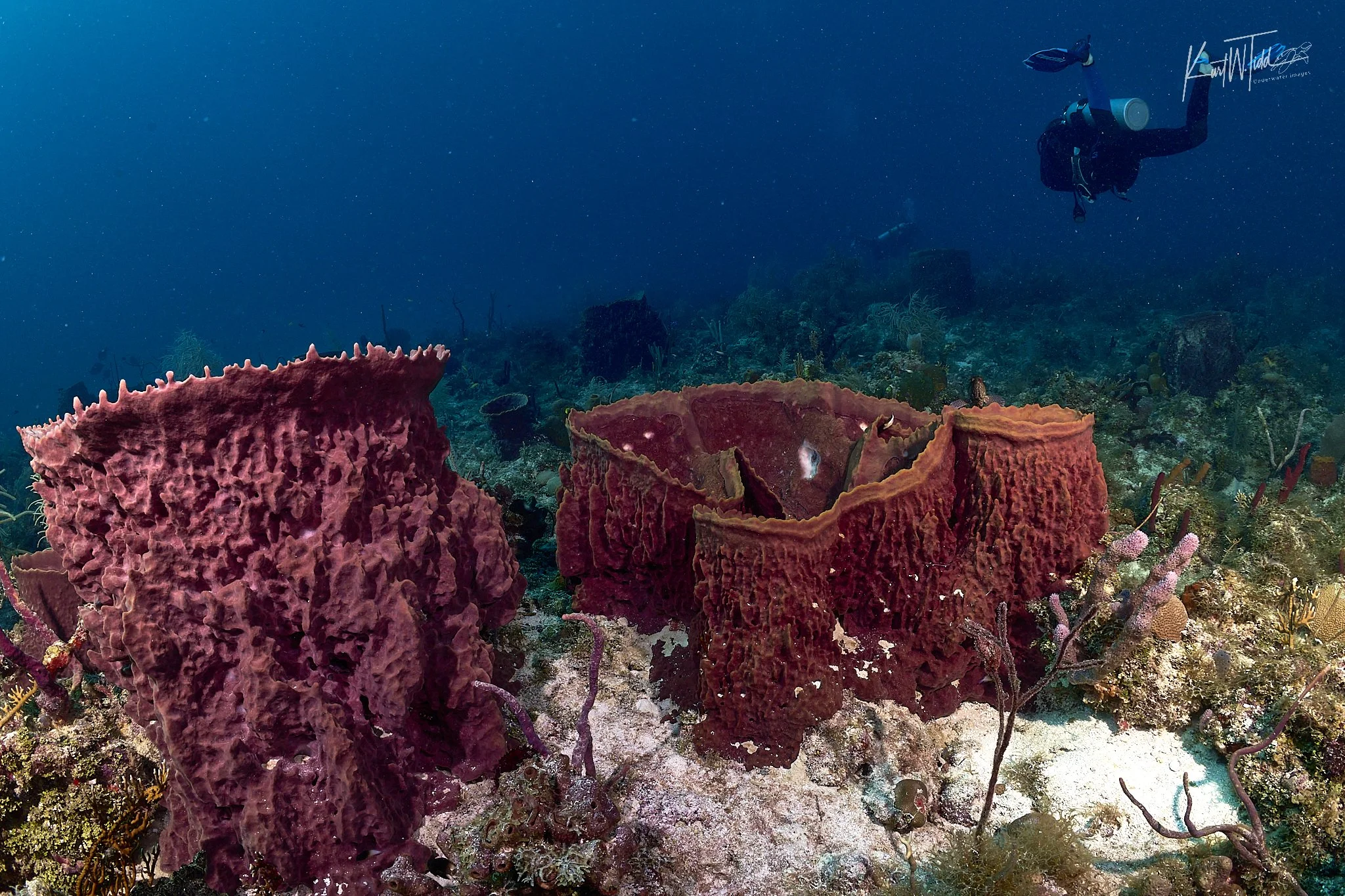
Sponges are the oldest members of the animal tree of life. Before dinosaurs ever walked the earth, early Cambrian sponges built reefs the way modern corals do today (Wulff 2016)! These ancient sponges had dense skeletons, but most modern sponges are softer-bodied with skeletons made up of a meshwork of spicules and spongin fibers.
Spicules provide rigidity to the sponge, like the bones in our body, and are made of silica or calcium carbonate. Holding these spicules together are elastic spongin fibers that make sponges “spongy.” They are most similar to the ligaments in our body. Like corals, some sponges have symbiotic relationships with microscopic algal cells that can provide energy to the sponge. Here in the Tropical Western Atlantic, many sponge species also rely heavily on filter-feeding.
Why are sponges important to coral reefs?
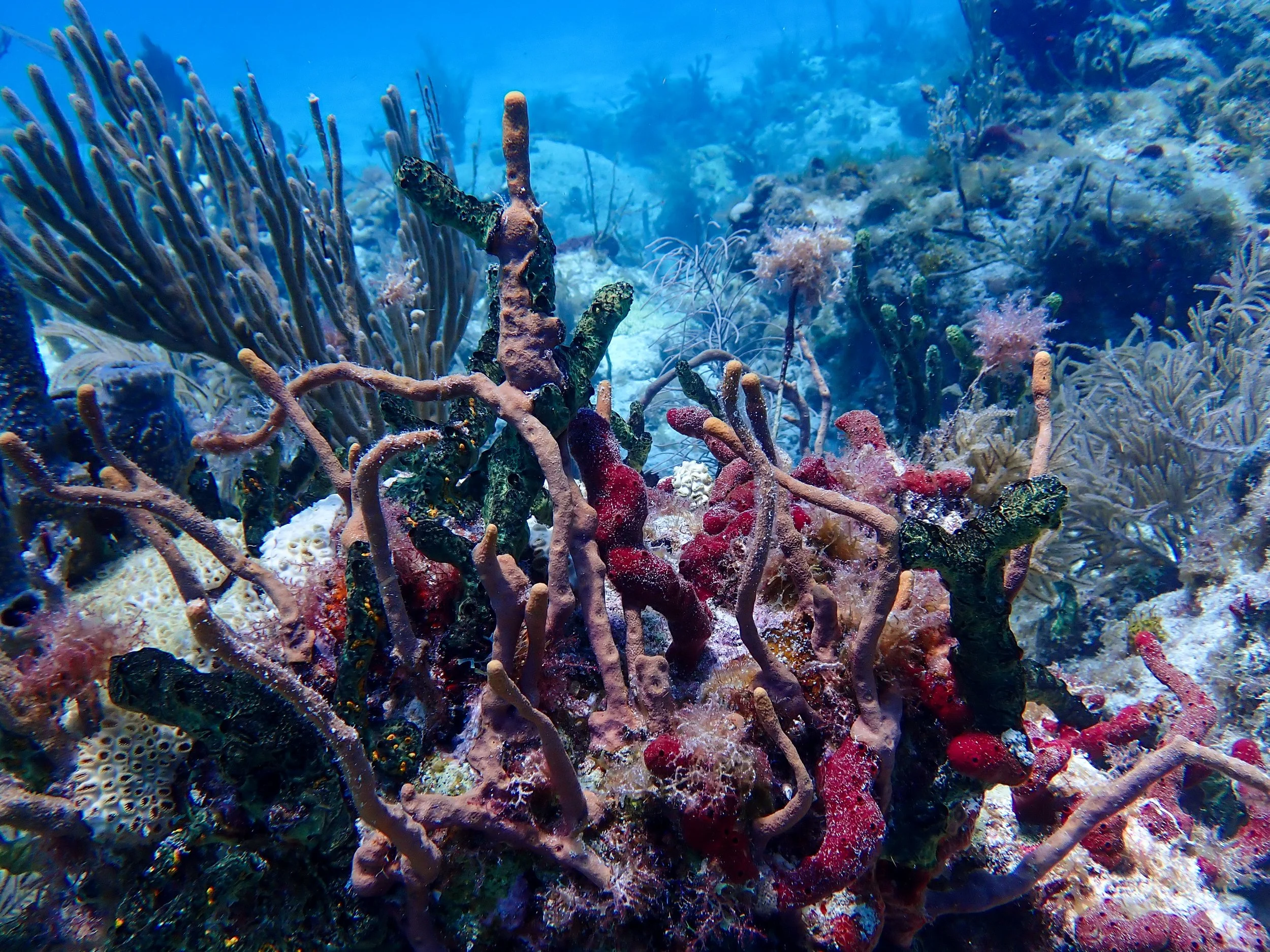
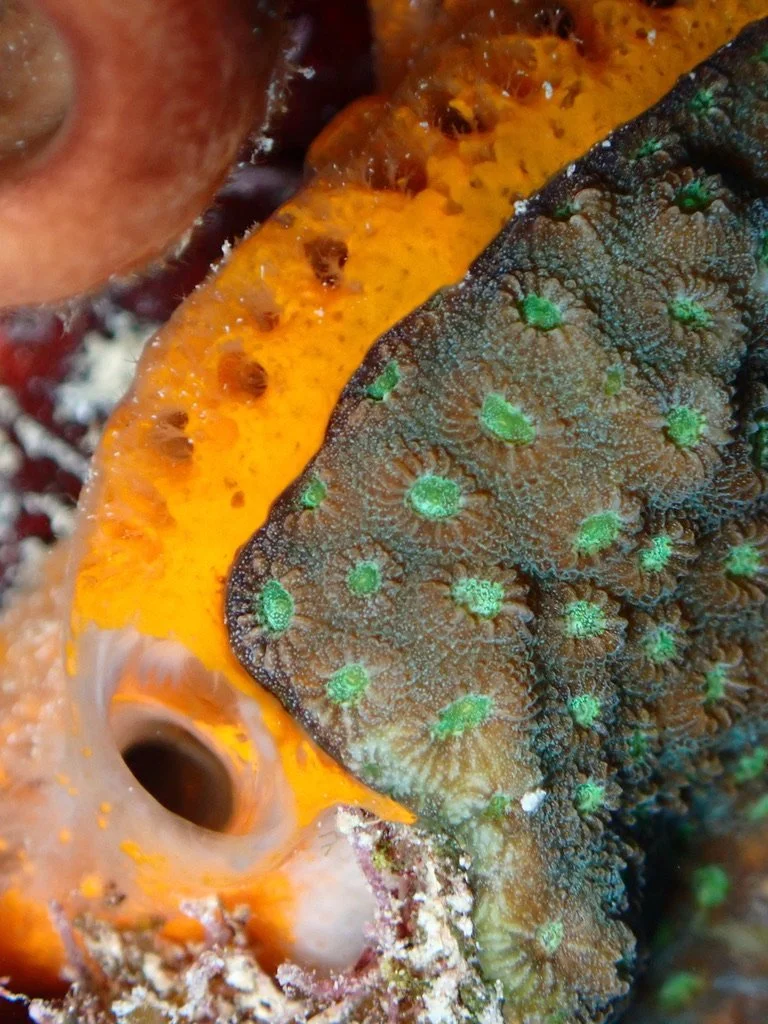
Corals build the physical structure of the coral reef, but they need help supporting such a complex ecosystem. Sponges play a huge number of supporting roles on the reef! The corals and the calcium carbonate structures they build are rigid and can break in storms, but sponges act like a living glue, holding the coral reef together and resolidifying broken coral rubble (Wulff and Buss 1979). Sponges also provide living space for a number of other marine species, including crustaceans, brittlestars, and fish. The diverse shapes of sponges and their complex system of internal canals offer shelter to prey species and provide an intricate hunting ground for tiny predators like polychaete worms (Hill 2020).
Sponges are not just homes for other creatures; they are also food. Organisms like sea stars, hawksbill sea turtles, angelfishes, and even parrotfishes consume sponges as a part of their diet (Wulff 2021). Finally, sponges are the water filter of the coral reef. They filter-feed on the tiniest plankton, called picoplankton, that no other group of animals can efficiently remove from the water. This sponge role is becoming more important as blooms of picoplankton increase in areas of nutrient pollution.
What challenges are sponges facing?
Climate change and declining water quality are negatively affecting sponge populations. Some species of sponges, including the giant barrel sponge, Xestospongia muta, bleach just like corals (McMurray et al. 2011). They lose their symbiotic algae, which causes them to turn a stark white color in patches across the sponge. Climate change also increases storm frequency and severity. Physical damage from hurricanes, such as Hurricane Irma, devastated sponge populations in both the Middle and Upper Keys (Kobelt et al. 2020).
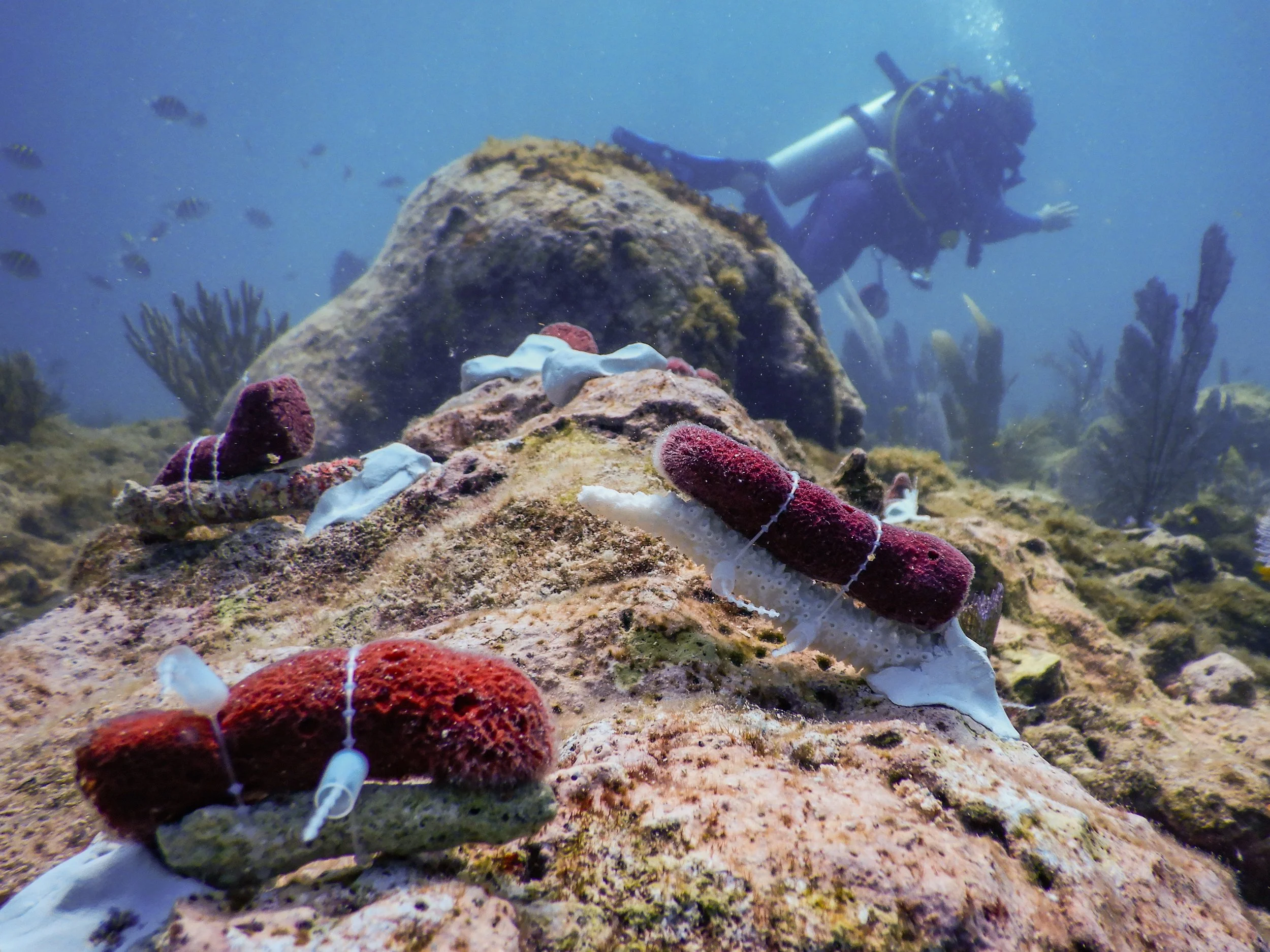
Increased levels of nutrients in the water column, or eutrophication, can also lead to declining water quality by causing algae blooms. Eutrophication has resulted in mass die-offs of sponges in multiple parts of the Caribbean (Stevely et al. 2011; Wulff 2013). Sponges also inherently face challenges due to being an understudied group. Relatively little monitoring is conducted on sponge populations, which makes it difficult to notice when a population begins to decline. Until our work here at I.CARE, there were no large-scale restoration programs specific to coral reef sponges! I.CARE’s monitoring work combined with our development of restoration methods is drawing awareness to the sponge species that help support Florida’s Coral Reef.
Literature Cited
Hill KM (2020) Community ecology of mesofauna associated with the Caribbean fire sponge, Tedania ignis, and context-dependent effects of symbiosis. Dissertation, Florida State University
Kobelt JN, Sharp WC, Miles TN, Feehan CJ (2020) Localized Impacts of Hurricane Irma on Diadema antillarum and Coral Reef Community Structure. Estuaries and Coasts 43:1133–1143
McMurray SE, Blum JE, Leichter JJ, Pawlik JR (2011) Bleaching of the giant barrel sponge Xestospongia muta in the Florida Keys. Limnol Oceanogr 56:2243–2250
Stevely JM, Sweat DE, Bert TM, Sim-smith C, Kelly M (2011) Sponge mortality at Marathon and Long Key, Florida: Patterns of species response and population recovery. Proceedings of the Gulf and Caribbean Fisheries Institute 63:385–400together? Nature 281:474–475
Wulff JL (2013) Recovery of sponges after extreme mortality events: Morphological and taxonomic patterns in regeneration versus recruitment. Integr Comp Biol 53:512–523
Wulff JL (2016) Sponge contributions to the geology and biology of reefs: past, present, and future. In: Hubbard D.K., Rogers C.S., Lipps J.H., Stanley Jr. G.D. (eds) Coral Reefs at the Crossroads. Springer, Netherlands, pp 103–126
Wulff JL (2021) Targeted predator defenses of sponges shape community organization and tropical marine ecosystem function. Ecol Monogr 0:1–29
Wulff JL, Buss LW (1979) Do sponges help hold coral reefs together? Nature 281:474–475