
Did you know that the Florida Keys are home to the world’s third largest barrier reef? Yes, you read that correctly! Florida’s Coral Reef is a unique ecosystem that spans from St. Lucie Inlet, all the way to the Dry Tortugas. Of this 350 mile stretch, 3,800 square miles are protected by the Florida Keys National Marine Sanctuary (FKNMS). That means that when you’re in the Florida Keys, you’re within this sanctuary. For a community so intertwined with the ocean, conservation is crucial for protecting our backyards, and that starts with rebuilding the reef one fragment at a time.
Coral reefs directly support our community through shoreline protection, as well as ecotourism. When reefs are healthy, they are able to absorb wave energy during large storms. This is essential in a narrow, flat area like the Florida Keys. Not only do we benefit from the reefs, numerous marine organisms rely on these ecosystems. Though only accounting for about 1% of the ocean, coral reefs support around 25% of marine biodiversity! From the fish and invertebrates who use the reef as habitat, to the sharks who find their food sources here, these delicate ecosystems are vital for wildlife beyond just the corals.
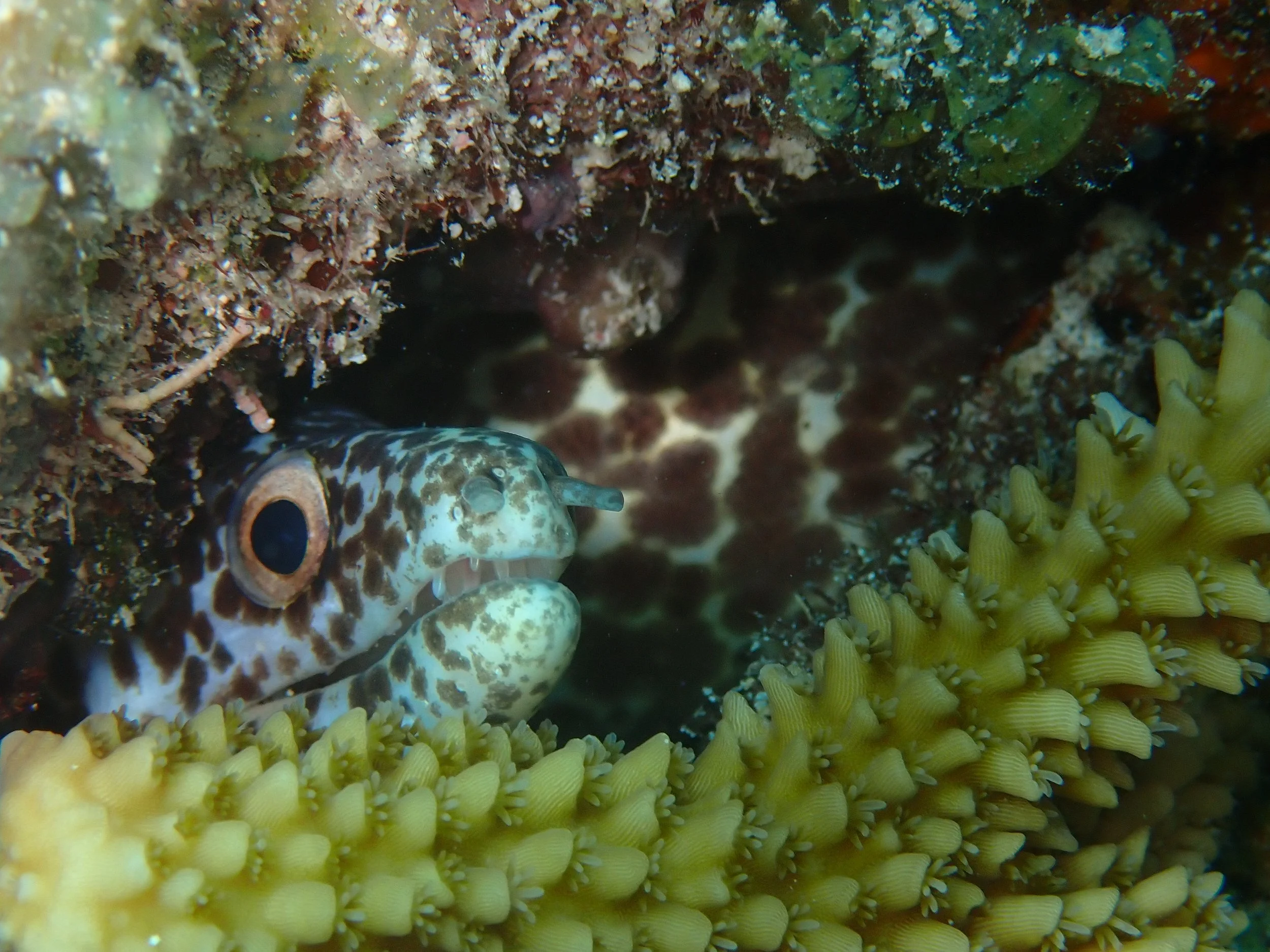
A spotted moray (Gymnothorax moringa) hiding amongst staghorn coral (Acropora cervicornis)
Healthy reefs are made possible by the corals themselves, which are colonial animals composed of many identical individuals called polyps. They form many different shapes and sizes, working to build the vertical and horizontal structure of the reef. They’re also known for their vibrant colorations, which can be attributed to symbiotic microalgae called zooxanthallae which live within the coral's tissue. This relationship benefits both organisms, allowing the zooxathallae to have protection from predators and the coral to gain its primary food source.
Unfortunately, coral reefs are facing many challenges globally; ocean warming is among one of the most notorious of these threats. Corals are sensitive animals with specific thermal tolerances. When water temperatures fall outside of their preferred range, the organisms become stressed and may even bleach. Bleaching occurs when zooxanthallae are expelled from the coral colony, resulting in stark white (but living) corals. In their state of stress, the corals don’t realize they’re losing 90% of their food source through expelling these symbionts. Imagine trying to perform your daily functions while you’re ill, with only a granola bar to fuel you…

The encrusting star coral (Madracis pharensis) displaying various levels of thermal stress ( no stress, paling, and bleaching)
On top of the global challenges, here in the Florida Keys, the reef is also facing various localized issues including poor water quality, disease, and predation. To combat these obstacles, restoration practitioners such as I.CARE work to transplant resilient corals back to the reef.
So, what actually makes a coral resilient? Here at I.CARE, we have a program called Corals of Opportunity. With permits from the FKNMS, we are able to collect coral colonies that have been dislodged from the reef. When corals are not attached to the primary reef structure, they can be smothered by sand, thrashed into the reef, and ultimately subjected to life-threatening stressors. In rescuing these colonies, not only are we protecting the reef from further damage, we are obtaining anomalies that have survived the most extreme thermal events to date.
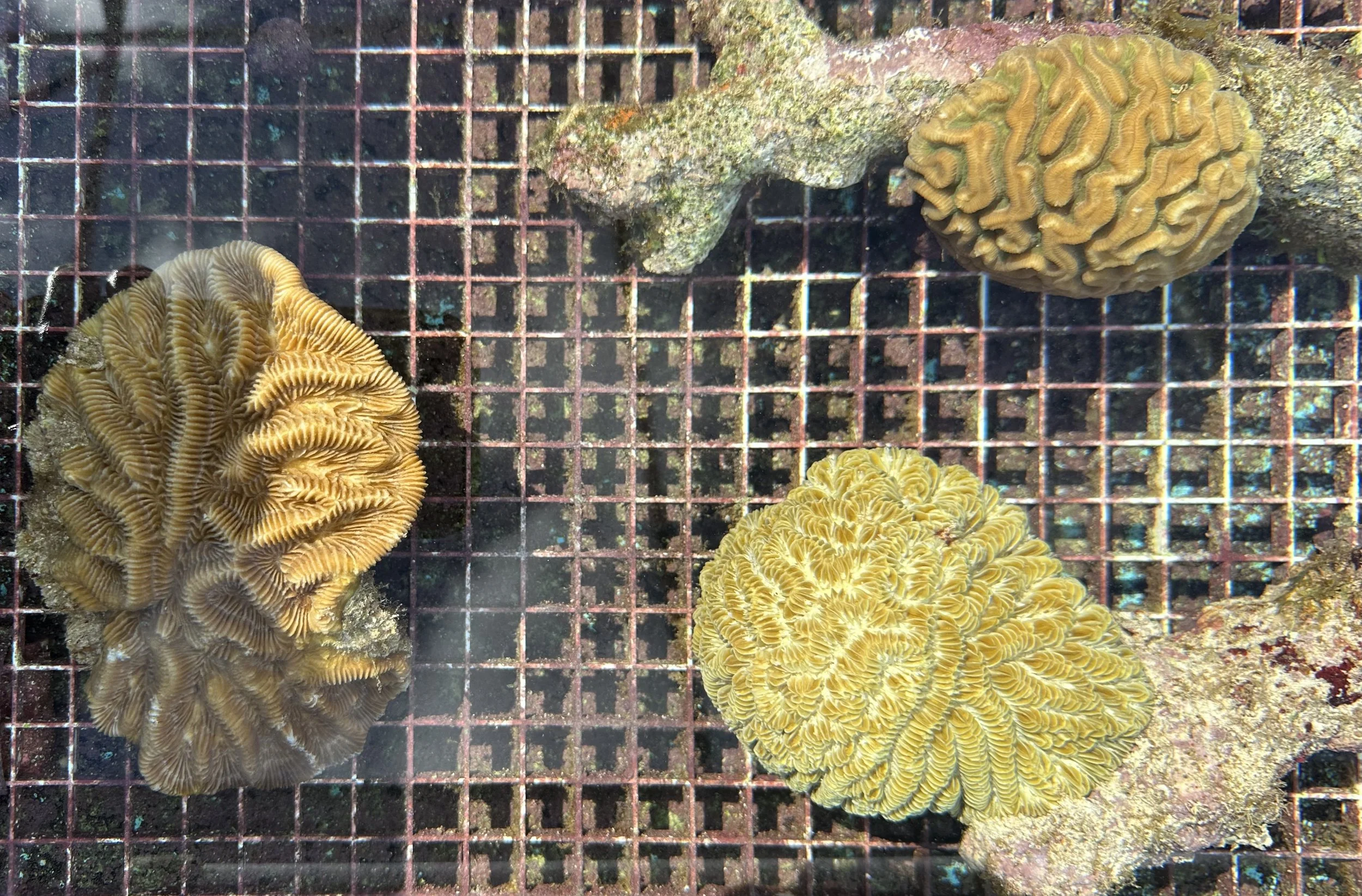
Three different COOs (Corals of Opportunity) in a tank at KML (Keys Marine Laboratory)
Upon collection, we bring the colonies to an onshore nursery, Keys Marine Laboratory, where they undergo a process known as microfragmentation. This process allows us to cut the colony into many smaller pieces called fragments, which triggers a rapid growth response within the coral. After undergoing microfragmentation, the corals are adhered to small plugs where they grow to outplantable size. Once reaching that size, the coral plugs are transplanted back onto the reef. Fragments that come from the same colony are placed very close together, as they are able to fuse into one colony over time.

The great star coral (Montastraea cavernosa) fusing back together on plugs at KML
With the help of recreational divers, we are able to transplant many diverse, resilient corals back onto Florida’s Coral Reef. We hope our efforts are able to directly promote biodiversity, and aid in building up our reefs to be stronger at a much faster scale.
Want to get involved? You can find the details to sign up at www.icareaboutcoral.org