
When talking about coral reef restoration, conversations tend to gravitate towards the obvious- corals! However, reef ecosystems are composed of much more life than solely our cnidarian friends.
Sponges are the earliest members of the animal tree of life, dating back to at least 600 million years ago in the fossil record! This means they predate dinosaurs by over 300 million years.
The organisms’ skeletons are composed of two primary types of structures- spicules and spongin fibers. Spicules are made of calcium carbonate or silica which are both hard acting like bones, whilst spongin creates “spongey” protein fibers.
These animals come in many shapes, sizes, and colors. Some common morphologies include branch, tube, barrel, excavating, and more!
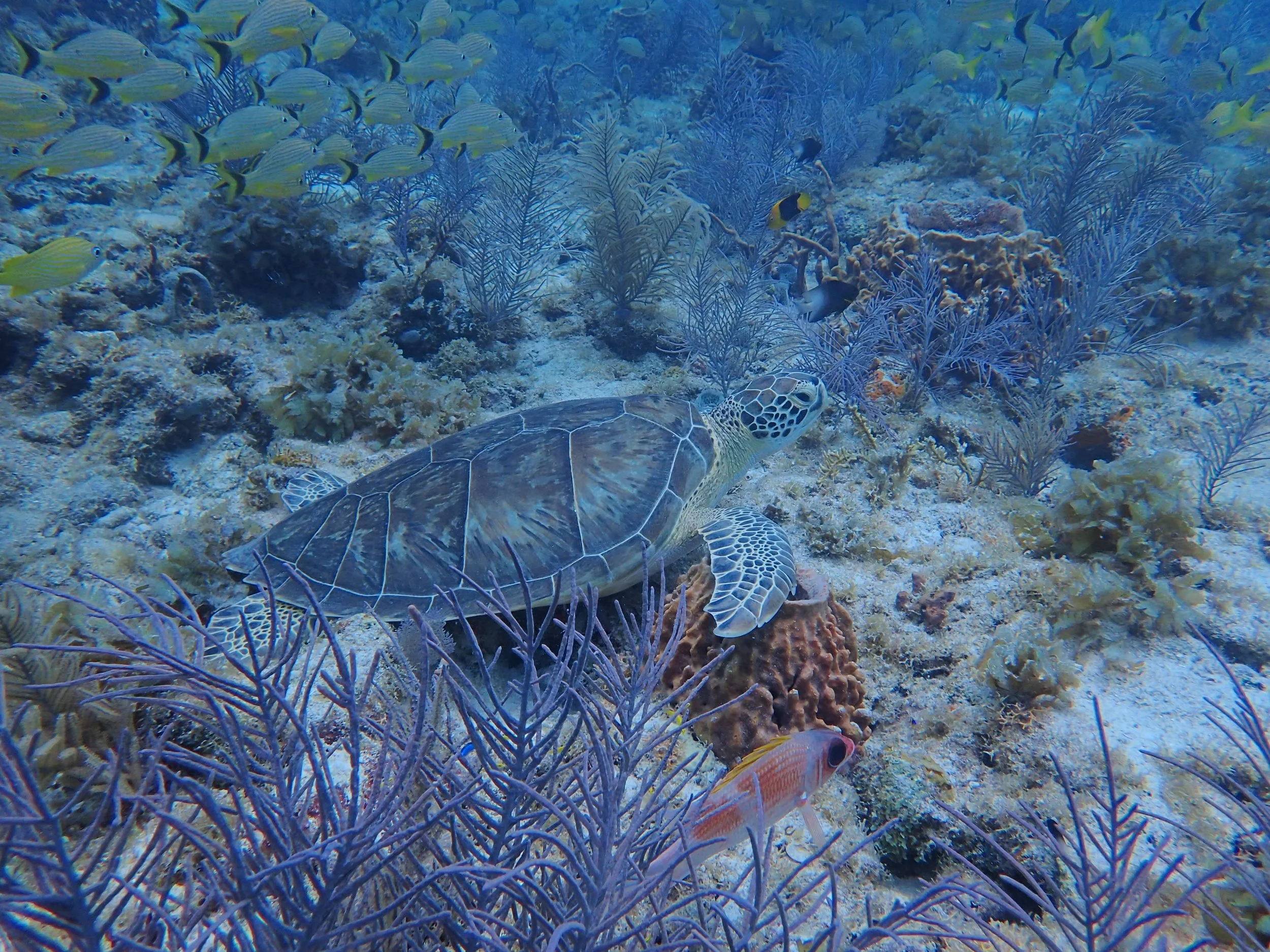
A Green Sea Turtle (Chelonia mydas) resting on a Giant Barrel Sponge (Xestospongia muta)
Sponges have several important ecological functions on our reefs. Firstly, they act as a glue to help adhere living coral colonies to the reef. They also have the ability to bind dead coral skeletons, or rubble, together which allows for reefs to rebuild after
large storms and create new areas for coral larvae to settle. More commonly, sponges are known as the filters of the reef, as they are highly efficient active filter feeders.
While these jobs may be the sponges’ 9:00 to 5:00, they never truly rest. They serve as living hotels for many invertebrate critters on the reef! From brittle stars, to hermit crabs, to snails, and more, sponges allow for a diverse range of habitats.
I.CARE understands the importance of sponges on Florida’s Coral Reef, and thus we have a dedicated Caribbean Reef Sponge Restoration program. As sponge populations decline due to factors including climate change, disease, and poor water quality, we work to transplant three branching species back onto our reefs.
Dr. Bobbie Renfro-Price, post-doctoral researcher and sponge program lead, brings expertise to an otherwise overlooked field of study. At I.CARE, she developed the world’s first immersive program allowing recreational divers to participate in the transplanting and maintenance of Caribbean reef sponges. Bobbie selected three species of rope or branching sponge known for naturally fragmenting and resecuring themselves: the green finger sponge (Iotrochota birotulata), the red sponge (Amphimedon compressa), and the purple rope sponge (Aplysina cauliformis).
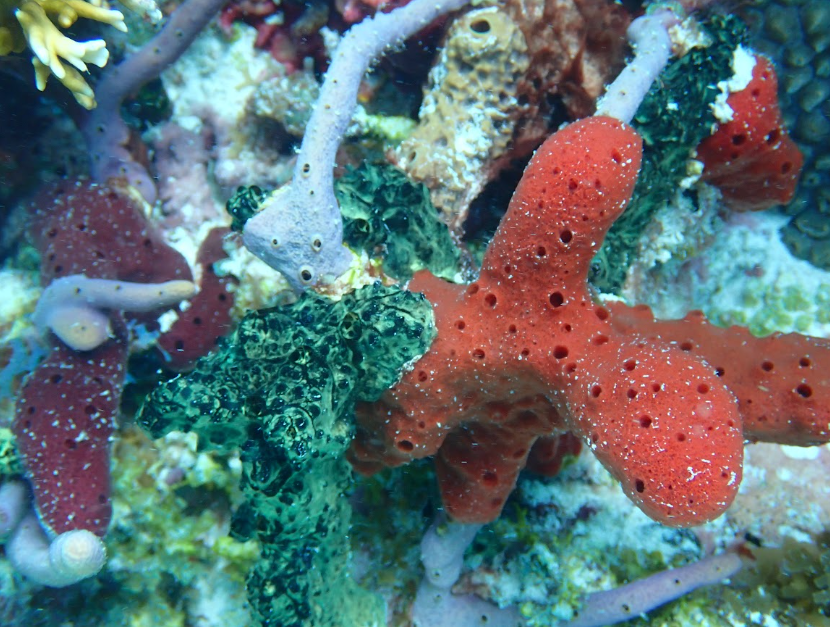
Our three restoration species: the green finger sponge (Iotrochota birotulata), the red sponge (Amphimedon compressa), and the purple rope sponge (Aplysina cauliformis).
These animals spend their time awaiting outplant days in offshore nursery space that we share with Mote Marine Laboratory. One of my favorite parts of working with the sponge team is getting to spend time in this nursery space, especially getting to see which animals live in and around the sponge trees and tables. I like to think of our nursery not only as a home for our sponges, but also a true nursery for baby animals too! From blennies, to urchins, to arrow crabs, and angelfish I truly never know what to expect.
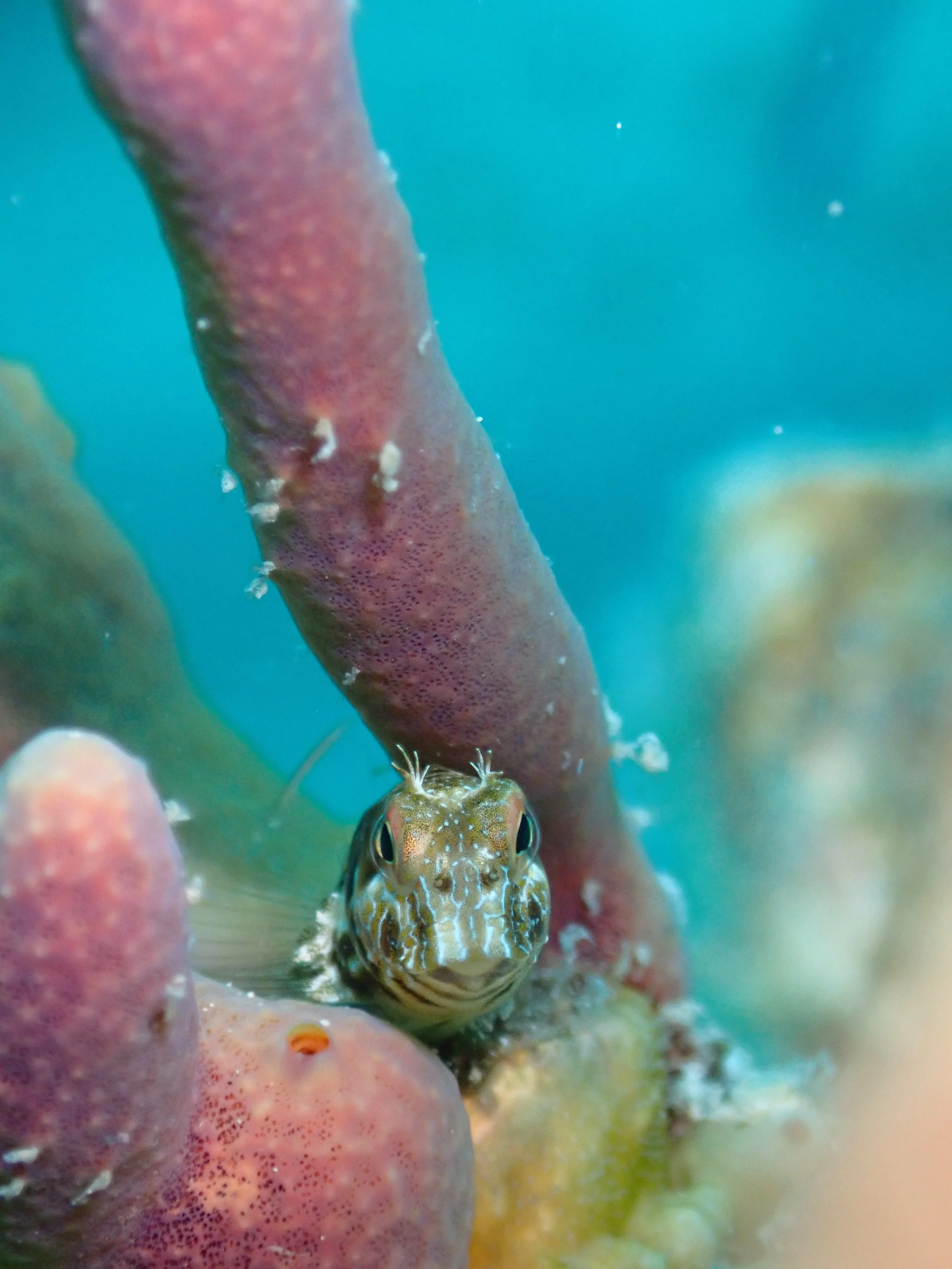

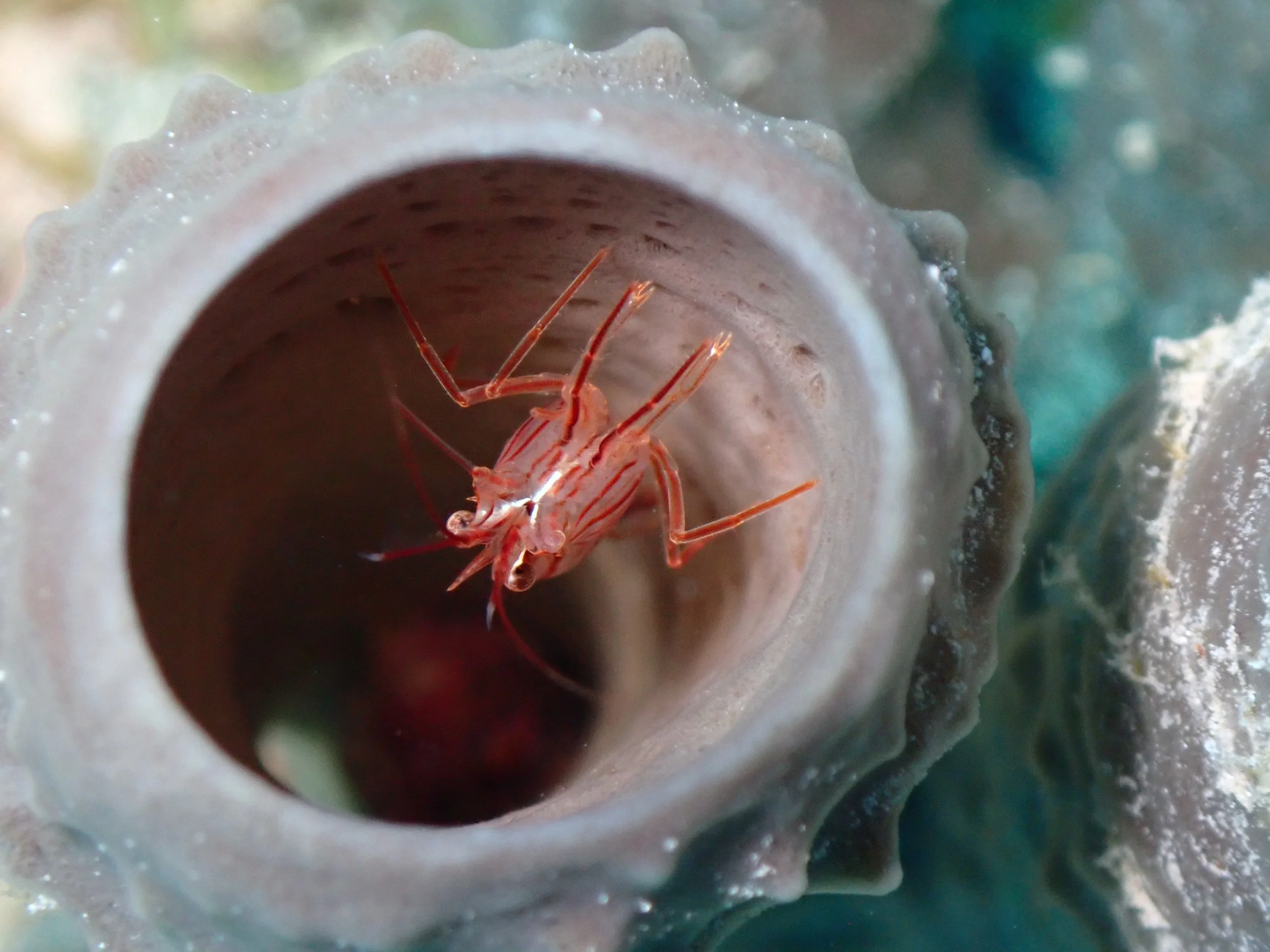
A seaweed blenny (Parablennius marmoreus), peppermint shrimp (Lysmata wurdemanni), long-spined sea urchin (Diadema antillarum), and yellowline arrow crab (Stenorhynchus seticornis) found on the tables at the sponge nursery.
Our sponge program brings together cutting edge science, community-based restoration, and hands-on collaboration into one memorable diving experience. Be sure to join us on a sponge transplanting trip this summer! You can find the details to sign up at www.icareaboutcoral.org.